R · Realistic
The Builder
Hands-on, moving and building. Stacks, climbs, takes things apart.
In a school, look for: Space to move, blocks and hands-on corners
TraitLens Early Admissions · ages 2½–5 · for parents
Answer 20 minutes about how your 2½–5 year old plays. Get the 4 things their school must have, schools to consider in your city, and your form and interview answers, in your own words.
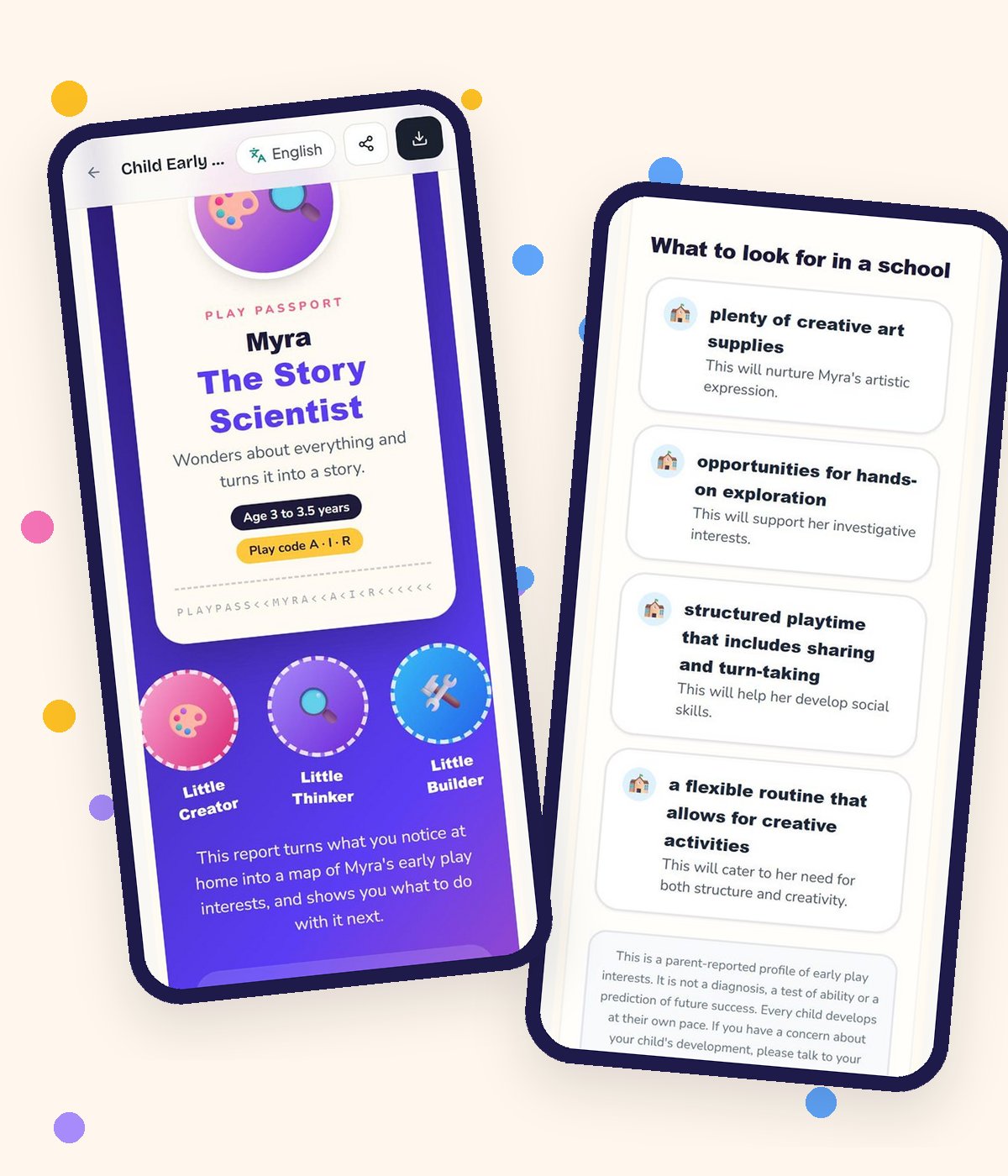 Real report screens
You’re not the only parent asking
The worries that came up most in our research with parents of 2½–5 year olds.
Common questions from our research, in parents’ own words. Not customer reviews.
A different way to choose
The science behind it
RIASEC comes from the psychologist John Holland. It is one of the most researched models of interests, and it sorts them into six types. The TraitLens early years test turns those six into kinds of play you can see at home, and you answer from what you see. Your child sits no test.
R · Realistic
Hands-on, moving and building. Stacks, climbs, takes things apart.
In a school, look for: Space to move, blocks and hands-on corners
I · Investigative
Curious about how and why. Asks questions, looks closely.
In a school, look for: Time to explore, nature walks, open questions
A · Artistic
Colour, music and make-believe. Draws, sings, tells stories.
In a school, look for: Art, music and pretend-play every day
S · Social
Caring and cooperative. Comforts friends, likes to share jobs.
In a school, look for: Small groups and warm, patient teachers
E · Enterprising
Leads games and talks to new people. Full of ideas.
In a school, look for: Chances to choose, lead and speak up
C · Conventional
Order, sorting and matching. Loves routines.
In a school, look for: A clear routine and tidy, labelled spaces
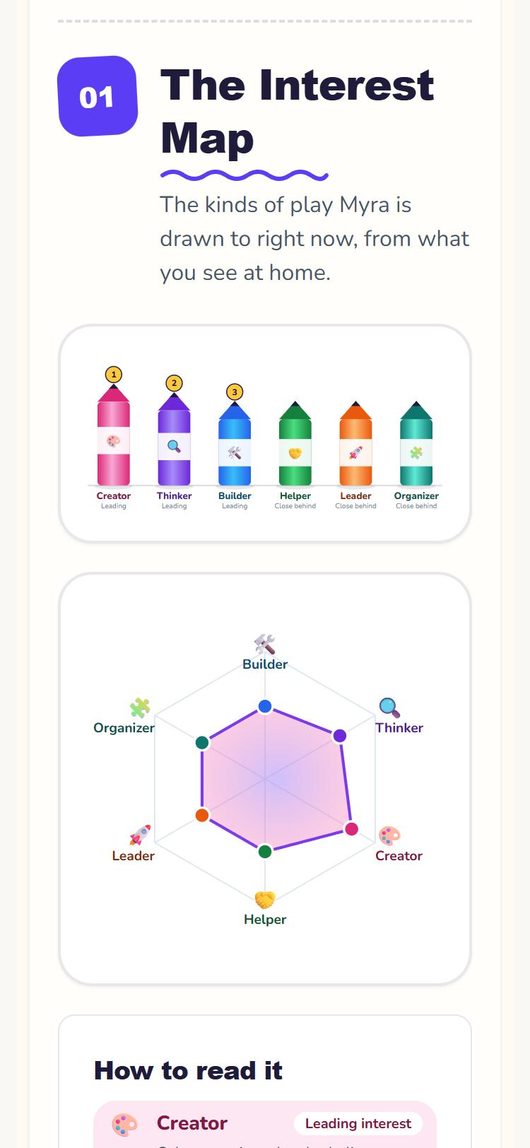
Every child shows all six, in their own mix. “A shorter crayon means that kind of play shows up less often right now. It does not mean less ability.” That line is in every report.
Inside the report
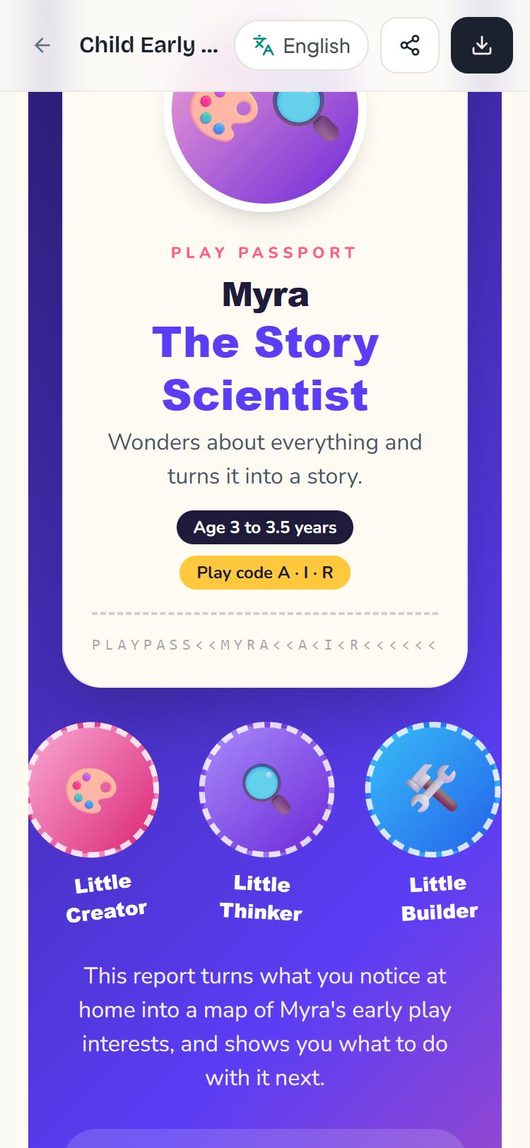
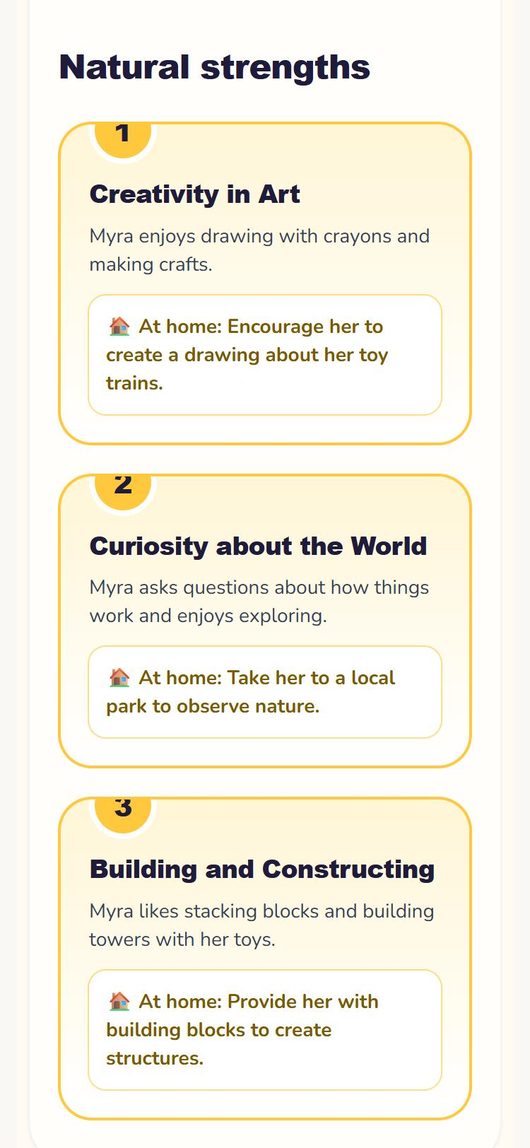
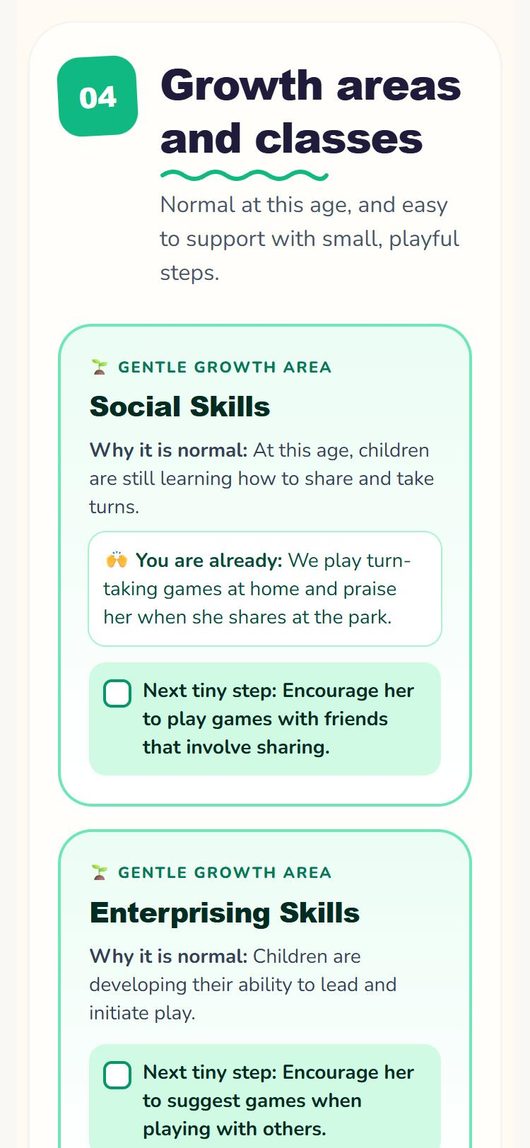
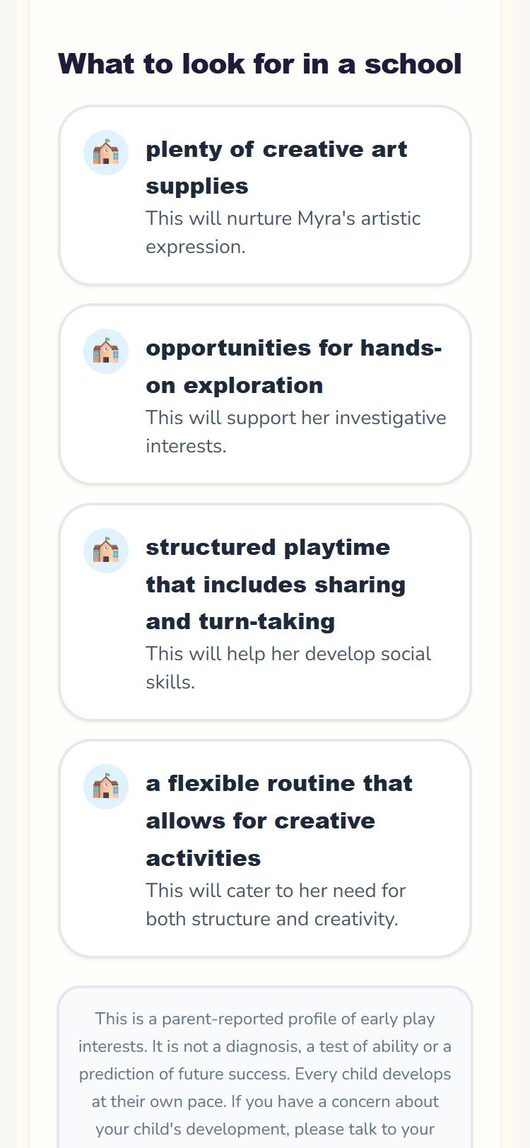
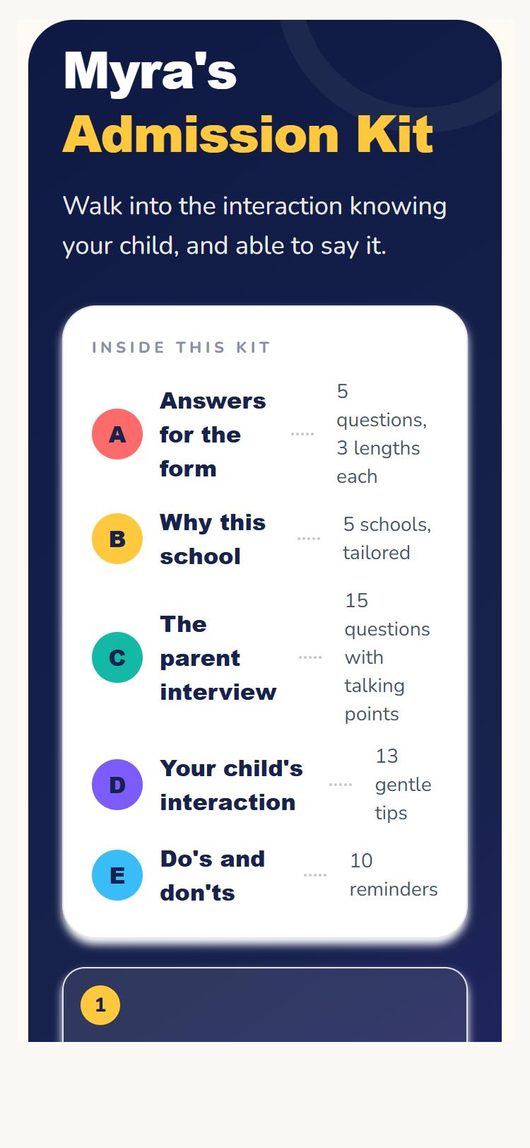
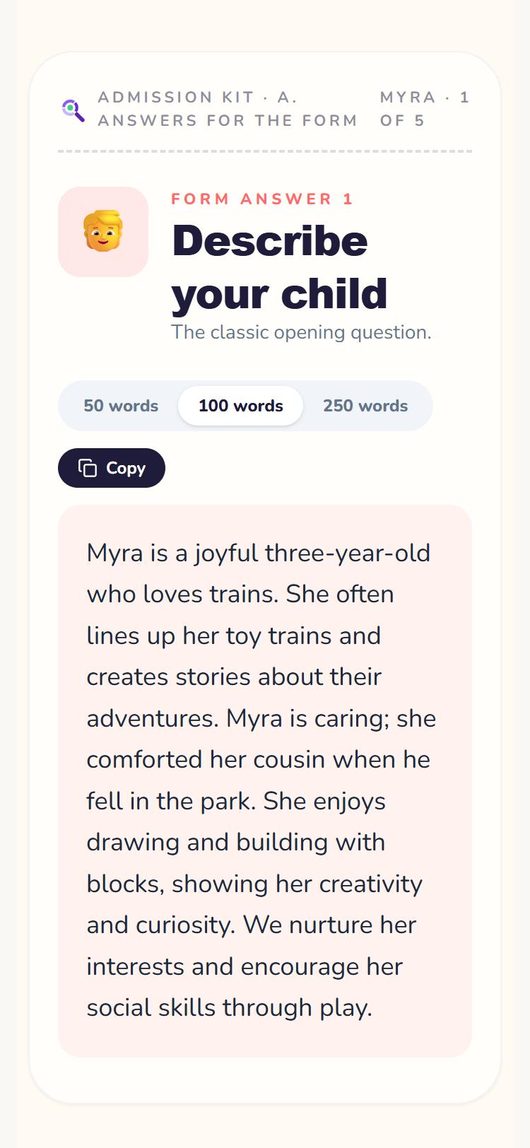
The Play Passport maps how your child plays and what their school should have. The Admission Kit turns it into form answers and interview points in your own words. Real screens below, from a test account with a made-up child.
Play Passport · Know My Child, 6 chapters
Admission Kit · written in your voice, from your own stories
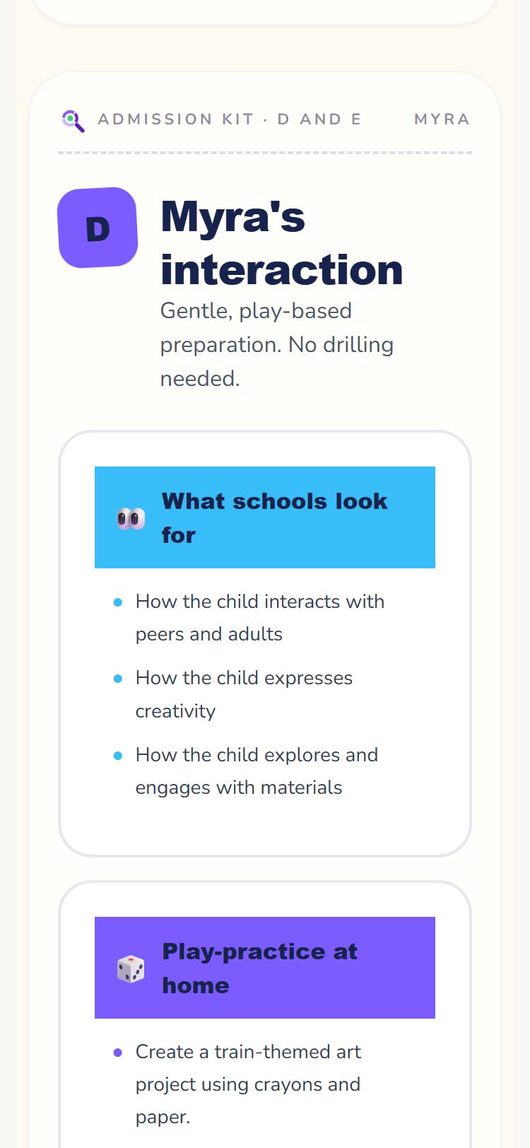
The full report opens every chapter and the Admission Kit, and downloads as a PDF.
How it works
Their age band, your city, four short real moments, then 30 quick questions about how they play.
Their play archetype, strengths, gentle growth areas, and the 4 things their school must have.
Pick a length, make it yours, say it aloud. Form answers, “why this school” and interview points.
The full report
Full report
Know your child, then walk into admissions ready.
If it doesn’t sound like your child
Parents who used TraitLens
From resistance to confidence
My 10-year-old finally stopped hating studies. The report showed he’s an Organizer + Creator. We changed activities, and his confidence shot up.
Clarity we wish we had earlier
This saved us years of confusion. The stream recommendations were spot on. Feels like expert career guidance at home.
Straight talk
We'd rather lose a sale than sell you something that won't help.
Questions
The report doesn’t pick a board. It shows how your child learns best and the 4 features their school should have, which is the question under the board question. The shortlist shows each school’s curriculum, so you can compare.
No one can promise a seat, and we never will. It helps you choose schools that fit your child and prepares your form and interview answers. Schools decide admission by their own criteria.
No. You answer about how your child plays at home. Your child doesn’t sit anything.
Every child develops at their own pace. The report frames growth areas as normal for the age, and the interaction tips are play, not drilling. Check each school’s age cut-off: many states now ask for 3 years by a set date for nursery.
Your answers come in three lengths, written from your own stories, so you can pick the one that is easiest to say. They are drafts: change words until they sound like you.
Lists give you the question. The kit gives you your answer, built from the moments you shared, so it holds up when a school asks “tell me more”.
Delhi nursery seats are allotted on points, and this report doesn’t change points. It still helps you choose which schools to apply to, and with forms and any parent interaction a school holds.
About 20 minutes: a few questions about your child, four short stories in your own words, then 30 quick questions.
Your answers are used only to make the report. They are never sold or shared.
Still have a question? Ask us on WhatsApp
Your move